On Tuesday, I was a guest on a radio show hosted by the Columbia, S.C., chapter of Links alongside celebrated historic preservationist Jannie Harriot (some relation).

For the white people reading this, Links is “one of the nation’s oldest and largest volunteer service organizations committed to enriching, sustaining, and ensuring the culture and economic survival of African Americans and other people of African ancestry.”
For Black people reading this, Links are the ladies who fund 73% of the “programs” in every Black community. White people offer “resources” and go to “camps,” while Black people have programs. And if you ever had an after-school tutor, went on a summer field trip to an HBCU or participated in an activity with a lot of ladies in white dresses who used the words “enrichment” or “mentee,” Links was probably behind it. If there’s one thing the Links love, it’s a good mentoring program. They’re basically what happens if the AKAs had a baby with the Boulé.
Anyway, when I was on this program with the bizarro version of the United Daughters of the Confederacy, they began naming my family members. Although my aunt was not a member of their organization, apparently, my aunts and uncles were all Links-worthy. They talked about how my grandmama was an advocate for the Democratic Party before it was a thing in the South. One of the hosts even recited a quote from my uncle James, whom we called “Uncle Junior.” Another mentioned that my grandmama was so rich that she wore a fur coat.
When they introduced my aunt Jannie, they mentioned that my aunts owned the first clothing store in our hometown, Hartsville, S.C. I knew this was part of my family lore, but I had forgotten all about it. After the show, I began texting my aunt Jannie to ask her the name of the store. Halfway through composing the text, I remembered.
This is the story of the “Mod Shop.”
My grandmother was not rich.
My grandfather and grandmother were originally from Lee County, S.C. It’s where every generation of their family that touched American soil had been born. It’s where their family was enslaved. They sharecropped there. It was their home.
Shortly after giving birth to her second child, my grandmother told my grandfather, “You should leave.” So he packed his bags and moved to Wilmington, N.C., with his younger brothers. After working on building ships for World War II, he received a letter from my grandmother telling him, “You should come back.”
When he returned, he began working as a driver for the family that employed my grandmother as a maid and nanny. Within a year, he was the first Black employee of the manufacturing company, Sonoco. When he was killed in a car wreck in 1968, my grandmother used the family savings to send my mother, along with my seven aunts and uncles, to college and help them open their own businesses.
Now, this rich, white family loved my grandparents. So when my grandfather drove this rich white family’s son to register to vote, the son insisted that they allow my grandparents to register. So people in my hometown assumed that this wealthy, powerful family helped my grandparents gain generational financial security. They think my grandmother voted Democrat because that white lady gave her a fur coat.
Here’s what actually happened.
In 1940, Franklin Roosevelt heard that Black activists, led by labor organizer A. Philip Randolph, were planning a March on Washington to protest the exclusion of Black people from the New Deal and manufacturing jobs during the buildup to World War II.
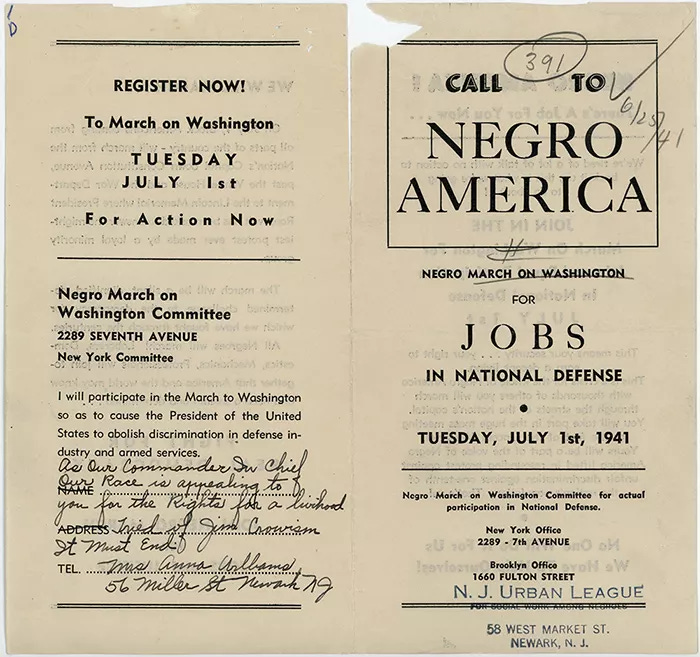
Fortunately, Eleanor Roosevelt’s best friend, Mary McLeod Bethune, was in charge of a group of Black policy makers known as “FDR’s Black Cabinet.” The president tapped one of the members, Howard University Professor Rayford Logan, to co-author Executive Order 8802, which desegregated the defense industry in preparation for World War II. Six months later, on Dec. 7, 1941, the Japanese bombed Pearl Harbor.
They were going to need some ships.
“The hiring of so many African Americans for skilled positions at the shipyard was unheard of at the time in the South,” the National Park Service reports. “Shipyard employees contributed to wartime campaigns. These included war bond drives, March of Dimes, clothing collections, and Community War Chest efforts.”
That’s why my grandfather left.
A few months later, Sonoco Products Company, owned by the family that employed my grandmother, won a bid to provide the packaging for the wartime munitions, which meant they had to hire a lot of workers. And because of Executive Order 8802, they couldn’t discriminate.
That’s why my grandfather came home.
That shipbuilding company and that rich white man might have been decent, but they didn’t give my grandfather anything. They needed workers. And because of Black activists, they couldn’t discriminate. And because they couldn’t discriminate, the entire country benefited. My grandmother had the right to vote. That white boy was probably too young to understand that he was expected to help disenfranchise Black people.
One of the most overlooked aspects of how Black people were left out of FDR’s New Deal was that it excluded domestic workers, farm laborers and most of the jobs that Black people held. According to the Washington Post, the original Social Security Act excluded 65% of Black workers. But in 1950, the NAACP forced President Harry Truman to amend the New Deal policies to include Black people.
And the people who assume that white people bamboozled Black people into voting for the Democrats are wrong. Although most people believe this switch to the Democratic Party began during the Civil Rights Movement, we actually began identifying as Democrats and voting for Democratic presidential candidates long before that movement.
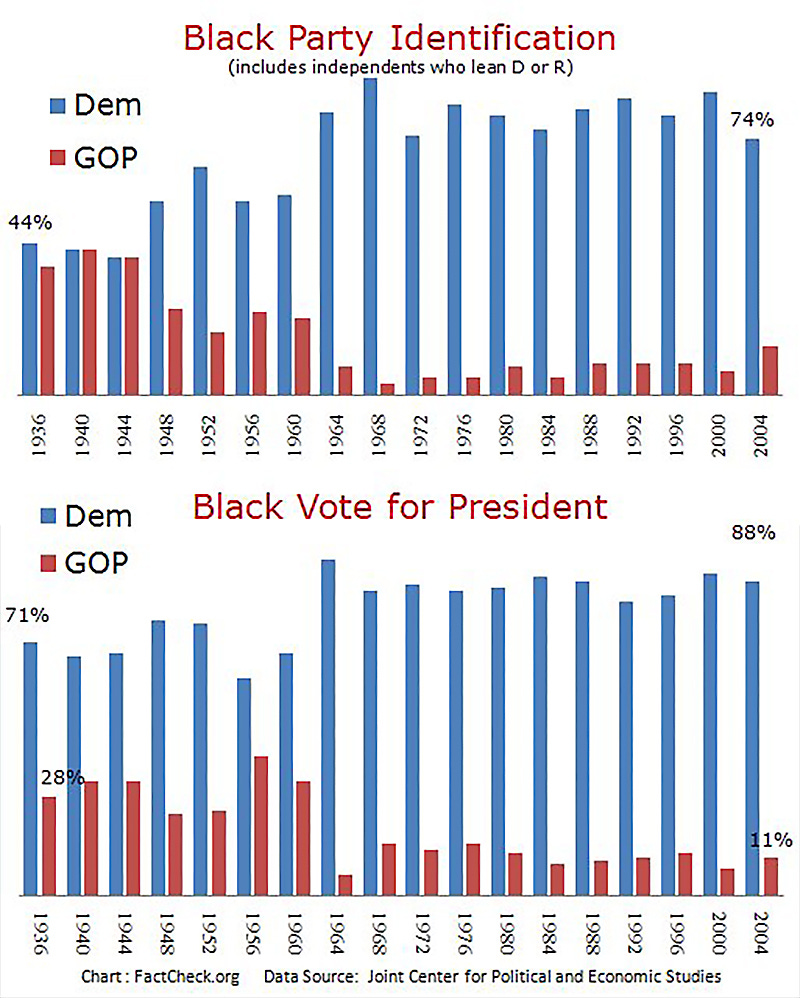
…Because we made them do what we wanted.
My grandfather was supposed to die broke. He had only earned Social Security for a few years, so his children wouldn’t get rich off the death benefits. He had insurance, so that helped. But after he died, my grandmother received a letter informing her that Black people had it covered.
Executive Order 8802 didn’t just prevent discrimination in hiring practices; it also forced companies to offer the same benefits to all employees, regardless of color. So, when the U.S. Shipbuilding Company and Sonoco bragged that 100% of their employees supported the war effort, they were talking about the workers purchasing war bonds. Apparently, my grandfather had received a bunch of WWII bonds as benefits and had never cashed them in.
And that’s how they opened the Mod Shop.
To be fair, my grandmother wasn’t a political expert or policy genius. She was just a Black woman from a tiny sharecropping town in Lee County, S.C. She wasn’t really an activist. Besides her family, her community and her Lord and Savior Jesus Christ, the only person she was concerned about was a Black woman from her hometown.
In many ways, one Black woman is largely responsible for Black people voting Democrat. She was behind Executive Order 8802. She pushed FDR on the New Deal, organized the Black cabinet and forced the legislation that created the Tuskegee Airmen. My opinion might be biased, but I believe she influenced the way my grandmother voted, her defiant attitude and even the way she dressed.
If you look in my grandmother’s photo album, there’s a picture of my aunt Jannie, my aunt Marvell and my grandmother wearing the fur coats that my grandfather bought from Wilmington, standing next to a picture on the wall of that Black woman from a tiny sharecropping town in Lee County, S.C.
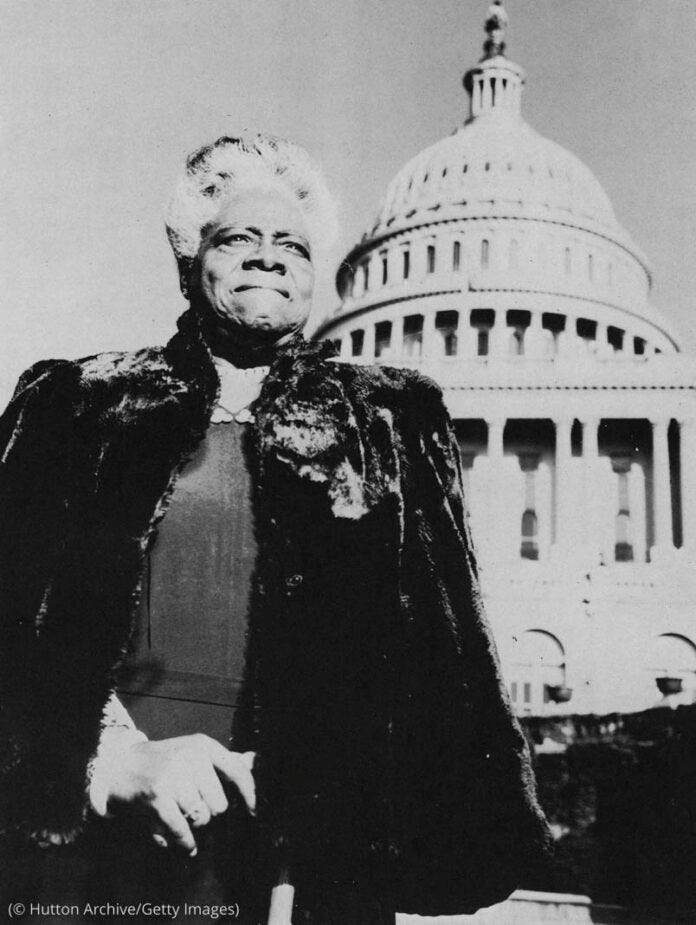
Mary McLeod Bethune.
Anyone who believes that the Democratic Party, America or white people gave Black people anything is dumb AF.
Even my grandmama knows it.
Thank you, Maier Amsden, Dr Bhembe's Newsletter, Jools, Sdr and many others for tuning into my live video!
Today’s Reading List:
The Beautiful Minds: The Secret History of the Black Brain Trust by Michael Harriot
A Letter That Changed History: A. Philip Randolph, FDR, and the Fight for Fair Wages by Samantha Sebesta
Fear Itself: The New Deal and the Origins of Our Time by Ira Katznelson
‘Black Rosies’: The Forgotten African American Heroines of the WWII Homefront by Aaron Randle