


My family had a rule growing up: If somebody hit you, you hit back. Not because you were guaranteed to win, but because a real fight, even one you lose, builds the backbone to fight harder next time. That is the lesson I think Democrats need right now, in this exact race.
Every election cycle, somebody tries to tell us what “electable” looks like: a résumé, a war chest, a national donor list before you’ve knocked a single door. Florida just told us that story is wrong, and the country needs to pay attention.
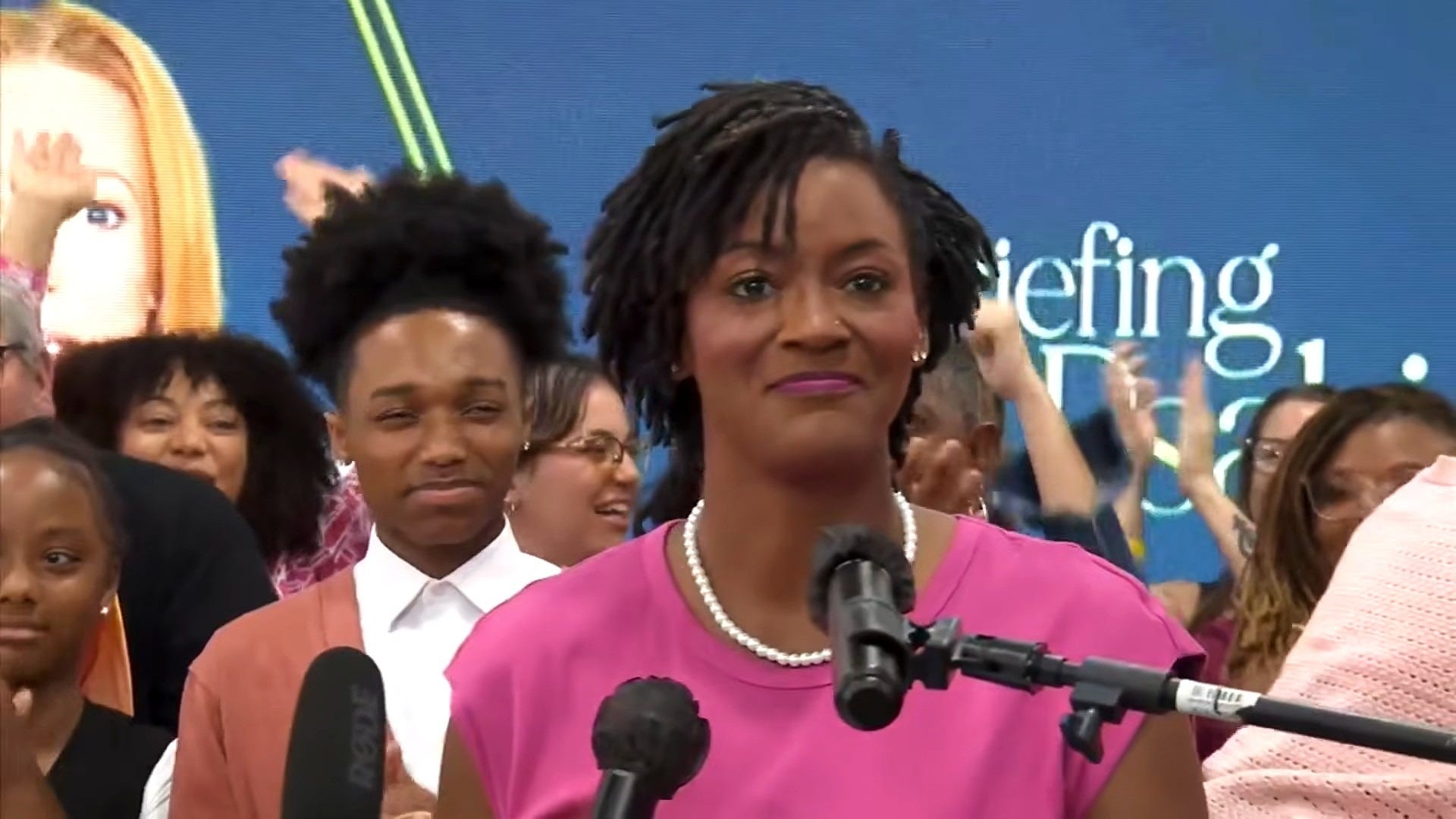
In August, State Rep. Angie Nixon won the Democratic nomination for U.S. Senate in Florida. She beat Alex Vindman, a nationally recruited, establishment-backed opponent who raised over $16 million to her nearly $1 million. She won by double digits, 56% to 44%, without the party clearing the field for her, without a super PAC, without being anybody’s anointed pick.
That is not a fluke. That is a trend we have watched build all year: unconventional, people-powered candidates outperforming the establishment’s pick, again and again, in places the machine said were settled.
A perfect storm, and the numbers prove it
Here is what should have every national organization’s attention right now. Two new polls out this month, St. Pete Polls and Change Research, have this race tied: 45 to 45, 47 to 47, in a state where Republicans hold a voter registration edge of more than 1.5 million people. Nixon is winning independents by double digits in both and running away with voters under 30, 64% to 25% in one survey. This race is within reach.
Florida, right now, is a perfect storm. People are pissed off about the economy, feel betrayed by an administration that promised relief and delivered none and are watching gas prices climb and home insurance double in four years, pushing longtime residents out of the towns where they grew up. That is not background noise; it is the whole race. Angie Nixon is standing in the middle of that storm, offering something more accessible than what either party has been selling and building a coalition from the people it is hitting hardest.
The scandal makes the contrast impossible to miss
While Nixon was out talking to people about what they can’t afford, a grand jury report confirmed that her opponent, Sen. Ashley Moody, who was Florida’s attorney general at the time, knew about and authorized a plan to divert $10 million in taxpayer money, meant for sick and medically needy children, into a political slush fund. No indictments came out of it. That does not make it right or forgettable. Moody—who was appointed to the Senate after Marco Rubio vacated the seat to become secretary of state—has not had to answer to a single voter for it and is now refusing to debate the woman asking her to.
That refusal tells you everything. A bully who is sure they can win a fair fight does not duck it. You cannot ask people to trust you with their vote while dodging both the questions about $10 million meant for sick kids and the woman asking them. That contrast, an accountable organizer against an unelected incumbent too scared to face voters, is exactly why this is not a local story.
The real win is what gets built, not just what gets counted
I need us to be clear about what winning means here, because it is not only what happens on election night. Nixon is building something that outlasts this cycle: a small-dollar donor base, a volunteer network and a coalition of Black women, labor and progressives who do not always get organized under the same tent. That coalition is the actual base the party needs going forward, not just in the South and not just in a midterm. Every door her team knocks on now, every list they build, every volunteer they train, is infrastructure the party either has or does not have two years from now, heading into 2028. It gets built now, in a real fight against real conditions, or it does not exist when the stakes are even higher.
This is why the fight matters even if Nixon comes up short, the same way my family’s lesson was never about a guaranteed knockout. It was about making sure the other side felt it. We have seen what a real fight can do to the boundaries of “possible.” New York City Mayor Zohran Mamdani’s win changed the conversation about what kind of candidate can build a winning coalition. Georgia electing two Democratic senators in one election rewrote the map for what the South could deliver. President Obama’s election changed what an entire generation believed was possible for who could hold power. None of that happened because people played it safe. Nixon’s campaign is that same pattern again, not a one-off, and a serious run on the back of a scandal this damning forces the Democratic Party to take its progressive wing seriously instead of managing it. A real fight now is how the party builds the backbone to support people-powered candidates when it matters even more.

This is also about where we compete, not just how hard. Too many red states get written off before a single door gets knocked on, and that costs us the discourse before the race even starts. Contending everywhere, not just where the map says it’s safe, is how you shift what the whole country believes is possible, not just what happens in one state. An upset in Florida does not stay in Florida. It sends shock waves through every state party still deciding where it’s worth showing up.
How close this actually is
Florida gets written off by the Democrats too easily. In 2018, Andrew Gillum came within 32,463 votes of becoming governor, in a state with over 21 million people at the time. That is the margin when people call Florida unwinnable. It is not unwinnable; it is under-resourced. The Senate math makes this urgent, too: Republicans hold a 53 to 47 majority, and Democrats need to flip four seats while protecting their own. Florida could be one of those four, and this seat, vacated when Marco Rubio became secretary of state, is only up for a two-year term before it’s back on the ballot in 2028, which means whoever organizes Florida now builds infrastructure that pays off twice. That is also why I need national organizations, donors and organizers outside Florida to treat this as more than a local race. Nixon built a grassroots, small-dollar campaign that beat $16 million with organized people instead of organized money, and the polls now show it working. What she is asking for is reinforcement, not a rescue.
This is not just an institutional ask. It is a personal one.
National organizations and donor networks matter, but I need us, Black folks, to hear this, too. We cannot leave this only to organizations and PACs and call it handled. Black voters have been the backbone of Democratic victories for decades, and too often we are asked to show up in November without anybody asking us to show up before that, in the primary fights, when a candidate like Nixon actually needs us.
This is personal because Angie is one of us. A Black woman who organized in her own community long before anybody outside Florida knew her name. If we do not individually decide her campaign matters to us, not just to the party or the national groups, but to us, we cannot be surprised when the resources do not show up either. Organizations follow energy. We are the energy.
I am asking every one of us, individually, to do something this week. Give what you can, even $25. Tell somebody who has checked out that this race is worth their attention. Share her story like it is your cousin running, because in every way that matters, it is.

I have spent 30 years organizing across the South, and I know what it looks like when a campaign has the people but not the resources to match them. This is that moment. The polls have moved, the scandal is documented, the base is energized and the infrastructure is already being built. Nixon has shown the country what organized people can do against organized money. Now it is on the rest of us to make sure organized money shows up behind her, too.
Whether Nixon wins or loses in November, if we show up for her the way we should, we hand the party proof that backing people-powered candidates everywhere is worth the fight. That is what this buys, whether or not it ends in victory.

I love Angie Nixon. I would vote for her as president.