
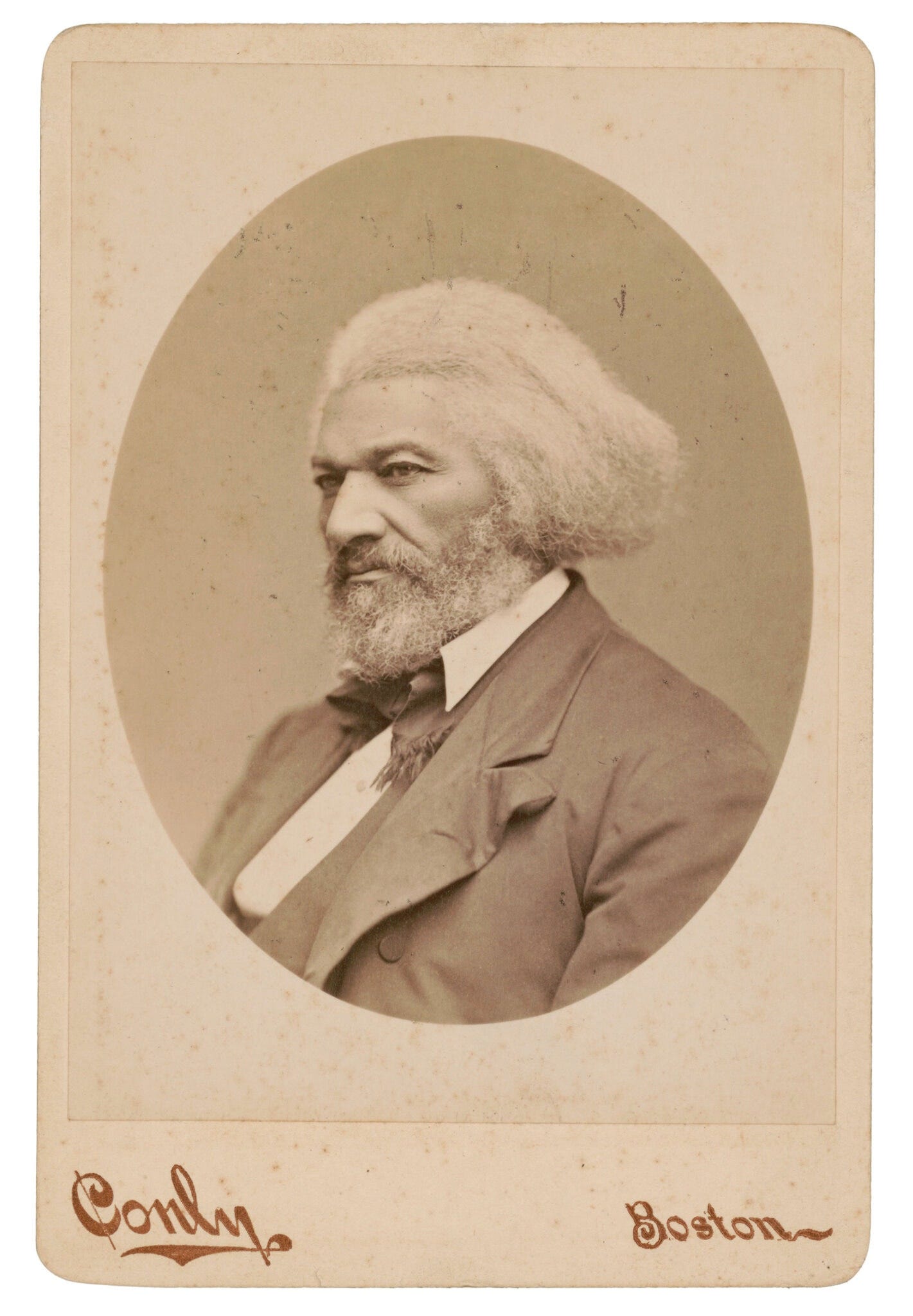
How Frederick Douglass’ Comedic Delivery Helped Deliver Us From Slavery
The Maryland-born activist was a fiery abolitionist—but he was also a humorist poking fun at planters’ revolting behavior to fuel the revolt against slavery.
Touring across 19th-century Europe and the United States, the legendary author and orator Frederick Douglass drafted jokes to draft audiences into the roiling war against slavery. A revolutionary entertainer, Douglass made his audiences laugh until their sides hurt so that they would side with the moral crusade for abolitionism.
In his Pulitzer Prize-winning Frederick Douglass: Prophet of Freedom, Yale historian David W. Blight recreates one such scene, when Douglass rouses a crowd to roar, snicker and giggle after he tells a joke about a racist white woman who faints while having a vision at church:
“When she awoke, she declared she had been to Heaven; her friends were all anxious to know what and whom she had seen there,” [Douglass told the crowd.] One “good old lady” especially needed to know “if she saw any black folks in Heaven?”
Then came the punch line: “Oh! I didn’t go in the kitchen!”
Douglass paced to another position on the platform, awaiting the howling laughter to subside.
The absurdity of white people’s belief in a segregated afterlife was only one of Douglass’s set pieces. On stages across the world, Douglass lampooned slaveholders as bizarre characters with no character. These men were the teachers who whipped Black kids for learning to read, the doctors who tortured Black patients, and the dentists who stole Black people’s teeth. Yet of all of slavery’s wickedly ironic personas, perhaps none drew more of Douglass’ satirical ire than the pious planters.
Having mastered the mannerisms of slave “masters,” Douglass would transform, adopting the air of a white, southern preacher to parody the South’s depraved deacons and corrupt chaplains in his infamous “Slaveholder’s Sermon.” As Blight explains, the speech was his most popular of the 1840s and centered Douglass’ “famous mimicry of a Methodist preacher’s appeals to slaves, based on the biblical text ‘Servants, obey your masters.’”
“Oh, consider the wonderful goodness of God!” Douglass would bellow during his fictive homily to slaves. “Look at your hard, horny hands, your strong muscular frames, and see how mercifully He has adapted you to the duties you are to fulfill while to your masters, who have slender frames and long delicate fingers, he has given brilliant intellects, that they may do the thinking, while you do the working!”
Auditoriums would snort and chuckle as Douglass chucked insults at slaveholders through his flawless impersonations. As one attendee put it, Douglass’ sermon left audiences “completely magnetized with his eloquence, laughing and crying by turns.”
This was perhaps Douglass’ greatest gift: to reveal an inverted world through Black people’s eyes. Slavery was a ludicrous system, one that said that the slaves who wanted to flee North to seek asylum ought to be put in insane asylums—ought to be diagnosed with drapetomania. Douglass took this diagnosis and flipped it, revealing the enslavers as the ones who were sick—who were deranged.
Through his satire, Douglass demeaned slavers’ mean demeanor. He removed the white gentry’s luster, exposing their lustful depravity, depicting them as plunderers living in manors with no manners, as cruel layabouts loafing while demanding fresh loaves of bread. Over the decades, through pamphlets and speeches, through quips and jokes, Douglass convinced legions to oppose those who posed as members of a “master” race.
Looking back on creators like Langston Hughes, George Schuyler and Zora Neale Hurston, looking back on the generations of Black writers, poets and playwrights who used humor to criticize police brutality, segregation and incarceration, one can see a family tree—an artistic and political lineage stretching all the way back to abolitionists like Douglass. Douglass embodied the bravery of the best Black satirists. He displayed the audacity to make gags about those who would bind and gag him, to write punchlines hitting those who had struck him. With his courageous wit, Douglass taught Black folks how to object to our objectification, how to turn suffering into an argument for suffrage, how to make light of what weighs us down, so that we may run fiercely and ferociously, sprinting toward freedom with all our might.


