


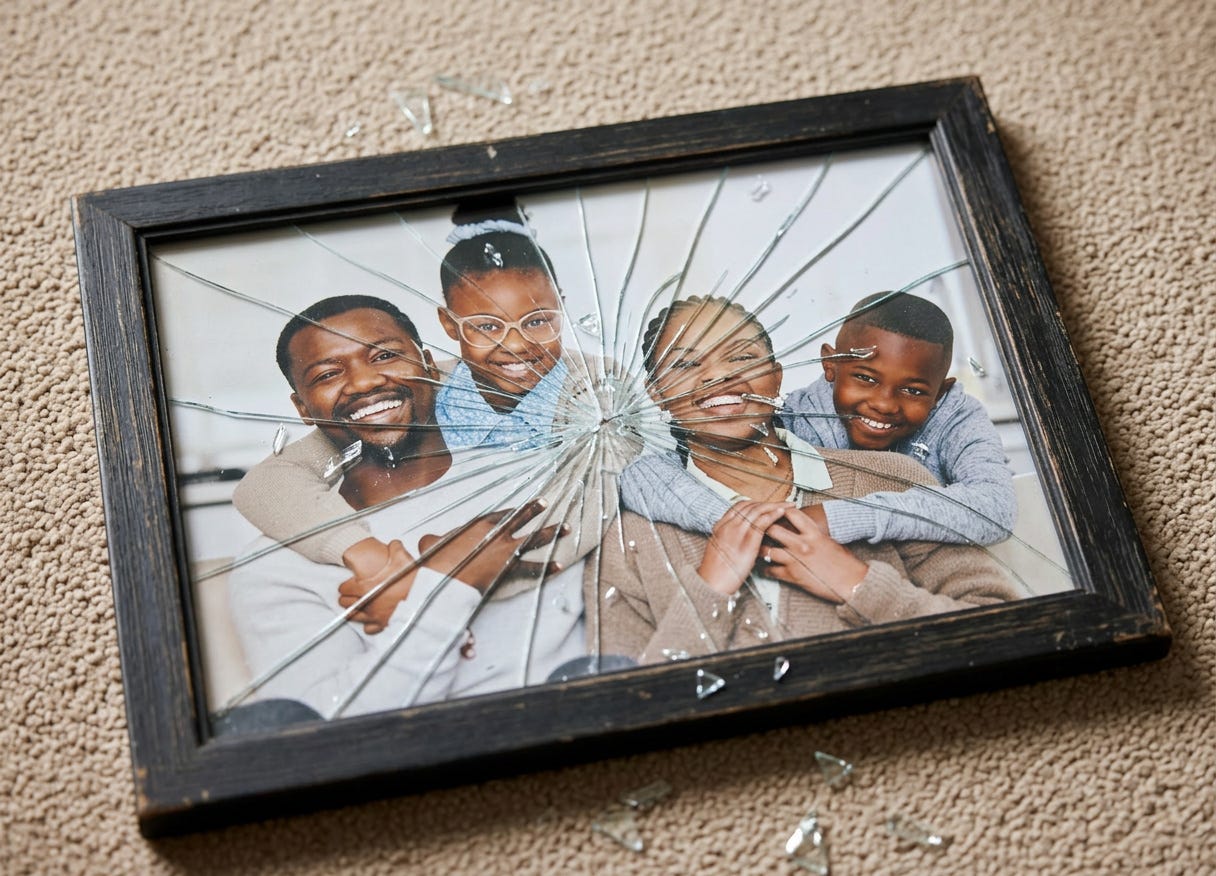
In three weeks, three Black women were shot—two of them fatally—in their own homes by the men who said they loved them. Nancy Metayer Bowen, vice mayor of Coral Springs, Fla., was killed just as she was about to announce a run for Congress; Dr. Cerina Fairfax was shot and killed in her own basement two weeks before the court ordered her husband out. Shaneiqua Pugh in Shreveport, La., was shot in the face and seriously injured by her husband, who then killed eight children, ages 3 to 11, the day before their separation court date. Eight babies. Used as a weapon against a woman trying to leave.
Most of the conversation that followed was about Black men’s mental health. The women, especially Cerina Fairfax, became footnotes in their own murders. We centered him in the story of her death, in real time. Before I go one line further, let me say what needs to be said: Our men are hurting. I know that. I am the daughter, sister, auntie, partner and friend of Black men, and I love them, and I am for them. But loving them has to include telling the truth about how we got here. We did not get here at the trigger. The road to that trigger was paved a long time ago.
My Grandmother Stayed 77 Years. We Called It Love.
My grandmother married my granddaddy at 15. He was 20. She wanted to be a school teacher. Her family could not afford to keep schooling her, and he had a little bit of land. That was the match. She birthed nine children, raised seven (two she lost in infancy). She never drove a car. She worked, but never enough to be independent. They were married for 77 years. All my life, I told that story like a love story.
We adored my granddaddy because my grandmother hid her pain deep enough that the grandchildren never saw it. She covered for him so her children would know they had a good daddy, even when he was not always a good husband. He ran the streets, and everybody knew. Some of those women were her friends. Some were family. But the proud family story we passed down at the table was that no matter what he did, he came home every night. That was the bar. He did his dirt, but he came home. What we did not talk about was what she swallowed to keep that story intact, and I believe now that the swallowing is what made her sick. I recently learned that one night, in a drunken, jealous rage, my granddaddy cut my grandmother’s breast so deeply she needed over 40 stitches. Forty stitches. And he was a good man. That is what we said. That is what we still say. And we talked about their marriage like a love story.

