


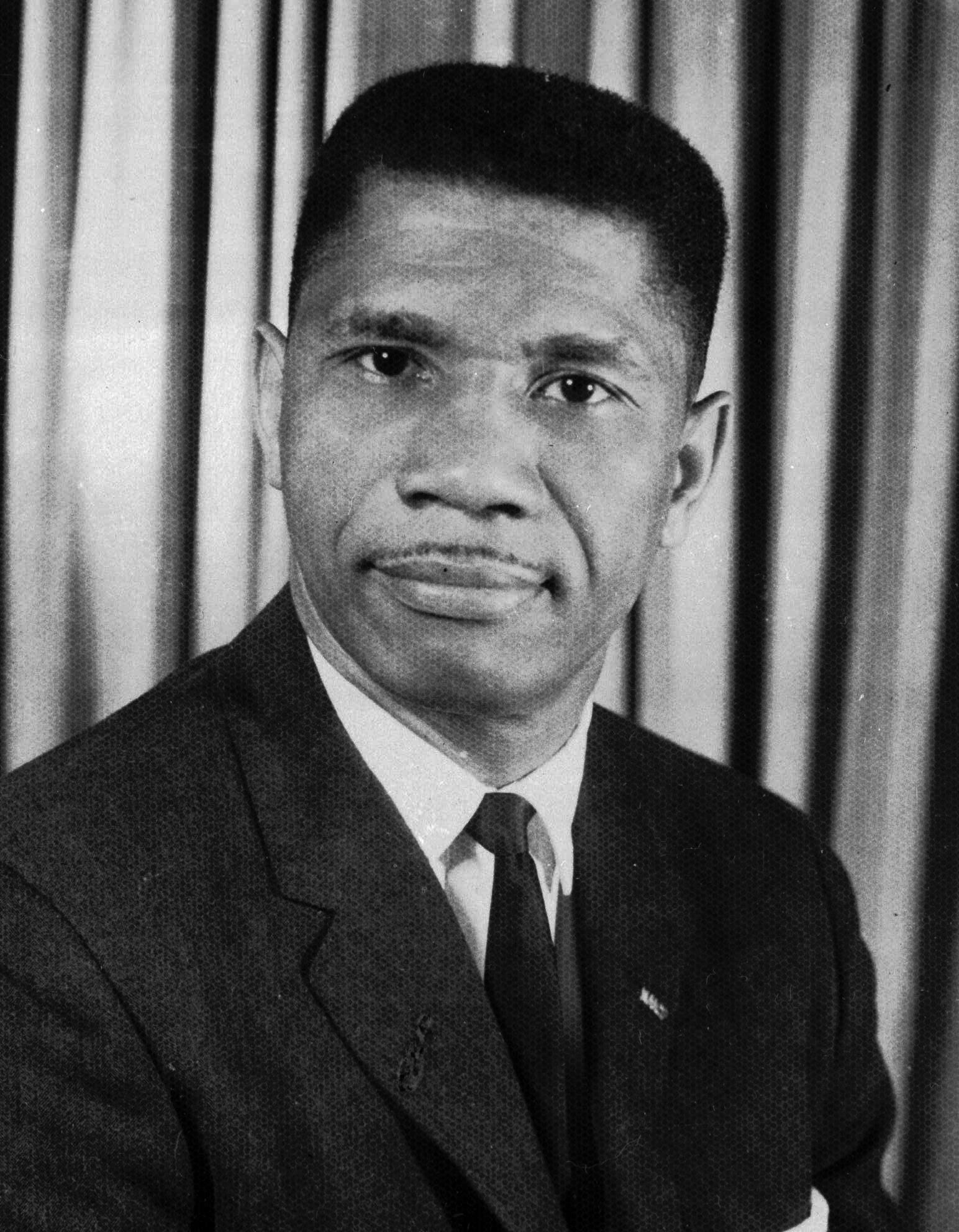
Medgar Evers lay at the entry of his home in a pool of blood, clutching his keys and holding a set of white T-shirts that said, “Jim Crow Must Go.” Evers, a civil rights activist and NAACP Mississippi Field Secretary, was returning home after speaking at a mass meeting focused on voting rights. He was shot in the back, murdered in the driveway of his home, in Jackson, Mississippi. It was June 12, 1963. He was 37 years old.
“My father pulled himself from his [car] door all the way to our porch,” Evers’ daughter Reena Evers-Everette, 71, remembers. “My mother was just screaming, screaming, screaming.”
Neighbors came out as Evers-Everette and her brother Darrell ran to their father’s side.
“We kept saying, ‘Daddy, Daddy, get up, get up,’” said Evers-Everette, who was 8 years old at the time. “He blinked, and he looked in my eyes as to say, ‘I love you.’”
As neighbors pulled the Evers’ children away from their dying father, others went inside the house and got a mattress—“my mattress,” Evers-Everette remembered—and put Medgar Evers on it, to take him to the hospital.
Earlier that evening, the Evers family, including Evers-Everette’s mother, Myrlie, and her two brothers, attended the mass meeting where Medgar Evers said he, “would give his life gladly if it would make it a better world for his wife and his children and those around the world.”
Evers-Everette stopped, overcome with emotion, remembering her father’s last speech.
“I’m sorry, it never leaves you,” Evers-Everette said. “That memory just plays around in your head all the time, in your heart, in the pictures, of everything.”

This year marks the centennial of Medgar Evers’ birth, the Mississippi civil rights leader who stood on the front lines in the struggle for civil rights and social justice in America. But 100 years after his birth, the very rights that Evers died for are being threatened as the future of the Voting Rights Act lies in the hands of a majority conservative U.S. Supreme Court.

