


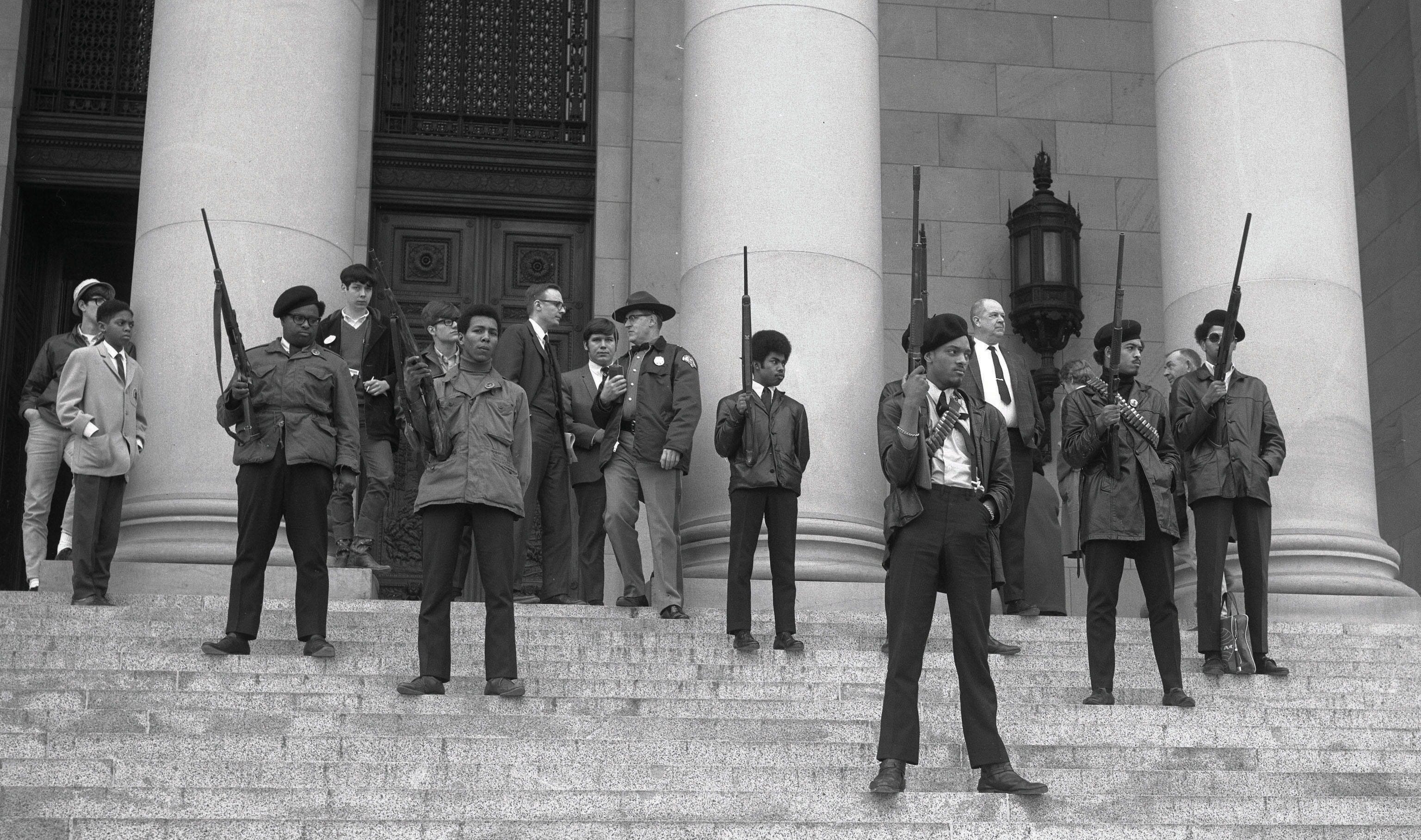
“We want education for our people that exposes the true nature of this decadent American society. We want education that teaches us our true history and our role in the present-day society.”
— Black Panther Party for Self-Defense, Ten-Point Program (1966)
The Black Panther Party embodied the phrase “standing on business” long before that expression came into existence. The Panther “business” in question, of course, was the plight of Black people in America. When they declared “All Power to the People!” it was accompanied by a dream clenched tightly inside their raised fists that America could be forced to do right by all of its citizens.
Oct. 15 marks 60 years since the Black Panthers first sauntered onto the scene. Founded by Huey Newton and Bobby Seale, the organization, whose original name was the Black Panther Party for Self-Defense, was formed to protect Black residents against rampant police brutality in Oakland, Calif. The 1940 Census logged 8,462 Black people in Oakland—about 3% of the total population. By 1960, that number had exploded to 83,618, making nearly 1 in 5 Oaktown residents Black. Thousands of Black folks had funneled into the Bay, spurred in large part by shipbuilding jobs throughout World War II, accompanied by hopes of escaping the hell of the Jim Crow South.
What folks found instead was that Jim Crow had brothers, uncles and play cousins on the West Coast.
So they weren’t exactly welcomed with open arms.
Despite landmark legislative civil rights wins preceding the Panthers’ formation, Black America remained plagued with poor housing, health and subpar schoolhouses. The Panthers attempted to dress these open wounds armed with a trifecta of no-nos when paired with Black skin—books, guns and direct aid.
This trifecta immediately got the group pegged by J. Edgar Hoover and his FBI as the “greatest threat to the internal security of the country.”
Two years after their debut, the Panthers began to franchise. Dozens of chapters appeared from coast to coast and the midlands between them. From Philly to my hometown of Portland, the Panther Party was amassing people power.
It’s been 60 years since the Panthers first emerged, but the group has remained a fixture of the American consciousness.
How they’re remembered is a different story.
